

Born From Love.
Built For Community.
The 1120 Kollective began as one mother's tribute to her son, and grew into a Chicago community where no one has to grieve alone.
Why The 1120 Kollective Exists
Grief is universal, but support for it isn't distributed evenly. People in communities of color and other underserved communities often run into real barriers: care that doesn't reflect their culture or beliefs, cost, stigma, or simply not knowing where to start. The 1120 Kollective was created to close that gap through peer connection, holistic practices, and cultural understanding, rather than a single clinical model applied to everyone.
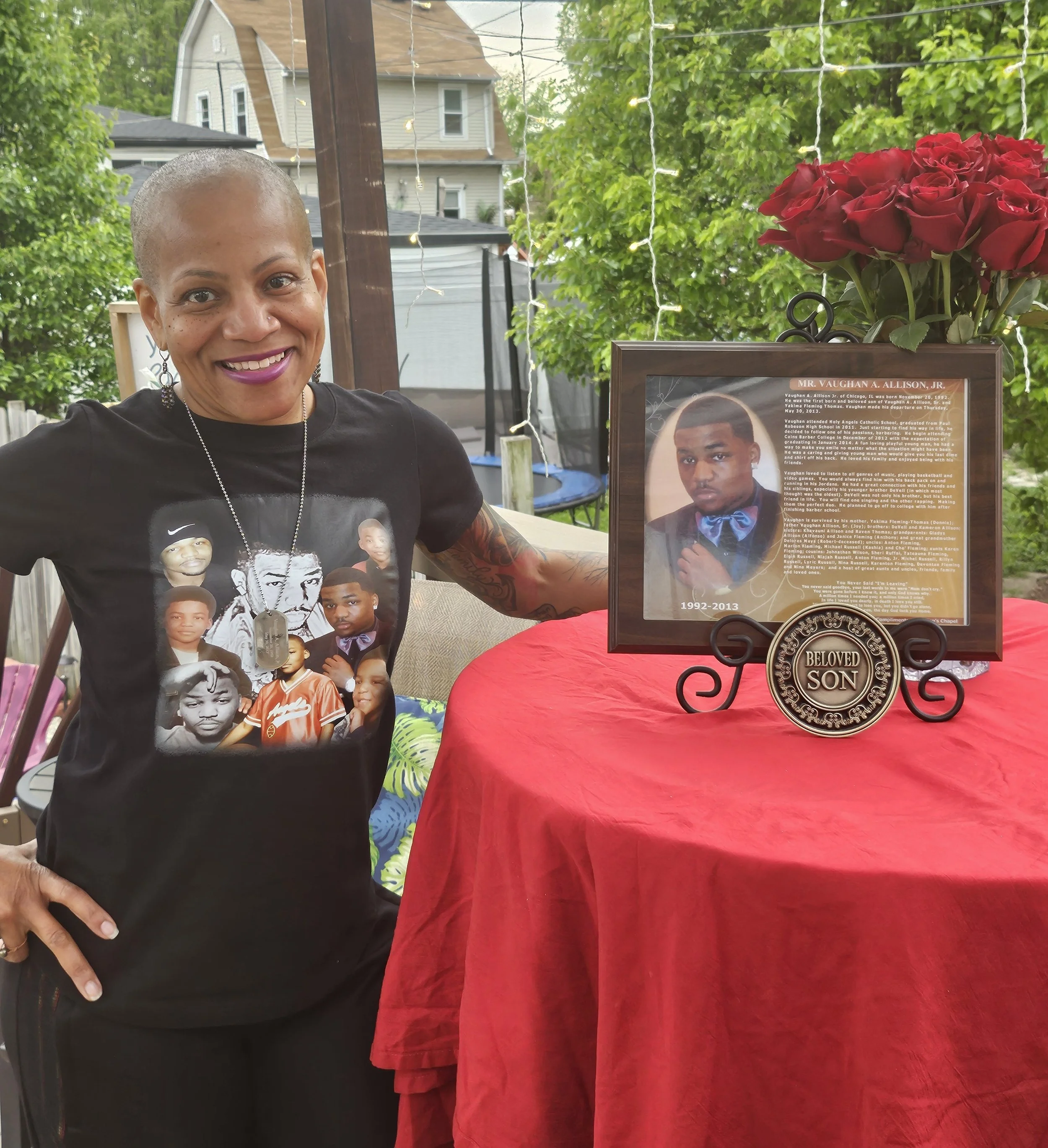
“The 1120 Kollective was created in honor of my son, Vaughan, whose life and love continue to inspire this mission. What began as a tribute to him has grown into a community for healing hearts, a place to lean on one another, share stories of resilience, and transform loss into light.”
Dr. Yakima Palmer, ND, MSNM, CPC, is a board-certified Naturopathic Doctor, healthcare professor, and corporate wellness speaker and educator. Her professional work — built around the framework Restore. Regulate. Reclaim. focuses on stress, burnout, and nervous system resilience, and that same whole-person lens shapes how The 1120 Kollective approaches grief.
Outside The 1120 Kollective, Dr. Palmer leads Yaks Wellness, her naturopathic practice offering root-cause, whole-person care by telehealth. If grief is showing up in your body, as fatigue, tension, pain, or other physical symptoms, you're welcome to book a free 15-minute discovery call with her there. Yaks Wellness is a separate practice and does not replace care from your own medical provider.
A Different Kind of Grief Support
Grief doesn't move in a straight line, and support shouldn't come in only one form. The 1120 Kollective was built around four principles:
-
We support the whole person — body, mind, and spirit — through natural, integrative practices, not just talk-based support.
-
Join us online from wherever you are, so support fits your life.
-
We honor the specific ways different communities, identities, and belief systems experience and express grief — support that reflects who you are, not a one-size-fits-all model.
-
We work alongside therapists, spiritual leaders, wellness educators, and community partners so you're never navigating loss with only one kind of support.

Who We Serve
Adults 18 and older grieving any form of loss.
Communities of color and underserved populations.
People navigating sudden, traumatic, or complicated loss.
Friends, family members, and caregivers supporting someone who is grieving.
Community groups, churches, schools, and organizations seeking grief resources for the people they serve

Our Commitment to Culturally Affirming Care
Black Americans, in particular, are less likely to seek bereavement support through traditional mental health systems, often because of stigma, cost, or care that doesn't reflect their lived experience. The 1120 Kollective was built as a different path forward: peer-led, community-rooted, and shaped by the people it serves.